Big Springs, Big Changes
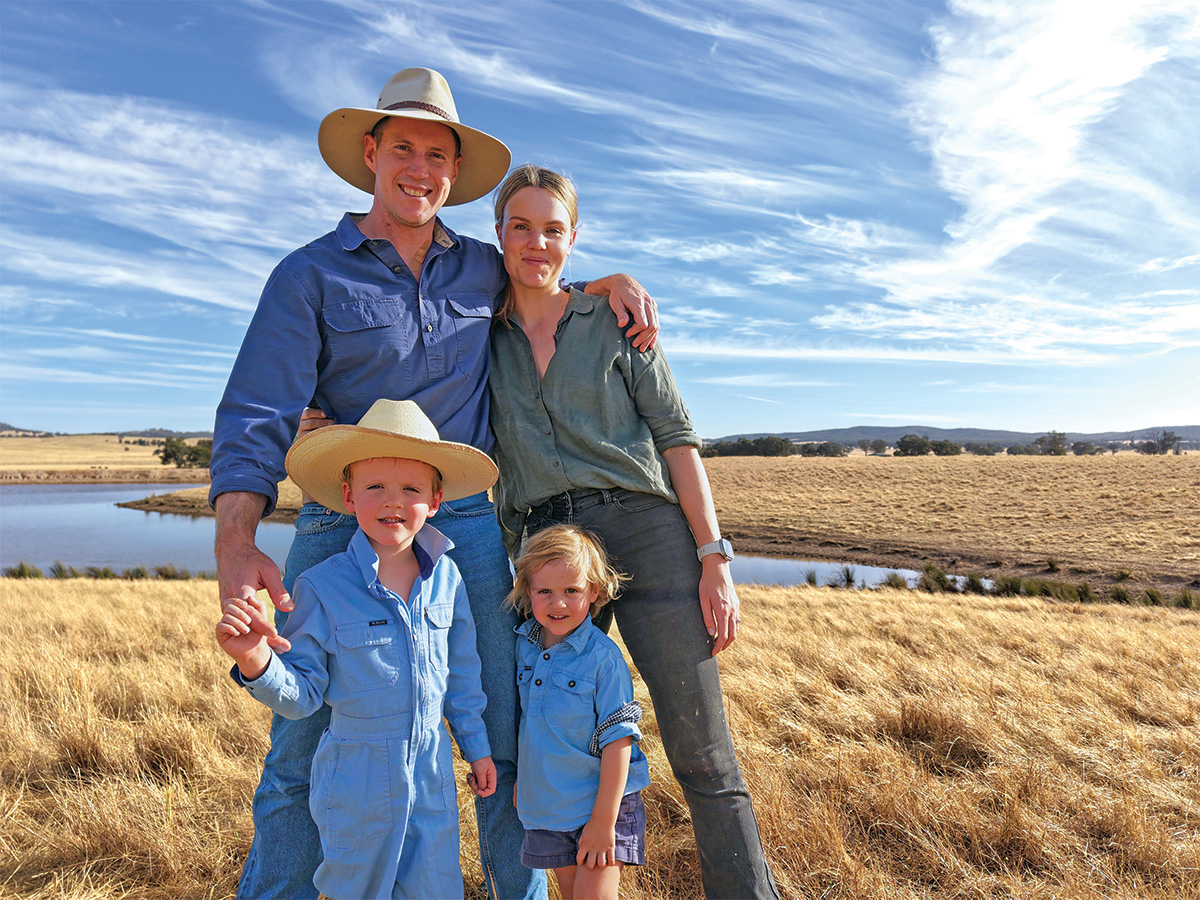


When Angus Wilson returned to Big Springs Station in Wagga Wagga, NSW with his family last April, he brought more than just succession plans. He arrived with a consultant’s eye and instinct for identifying inefficiency – and the conviction to change things at breakneck speed.
After building his career in Sydney, Angus and his wife Lily returned to Wagga Wagga and bought into the family business in 2014. Ten years at the helm of Big Springs Water, the family’s diversification venture that made succession possible, had sharpened his business acumen. And with his father Pat edging closer to retirement, Angus knew his window to work alongside him was narrowing.
“Working with Pato was something I had always really wanted to do,” says Angus.
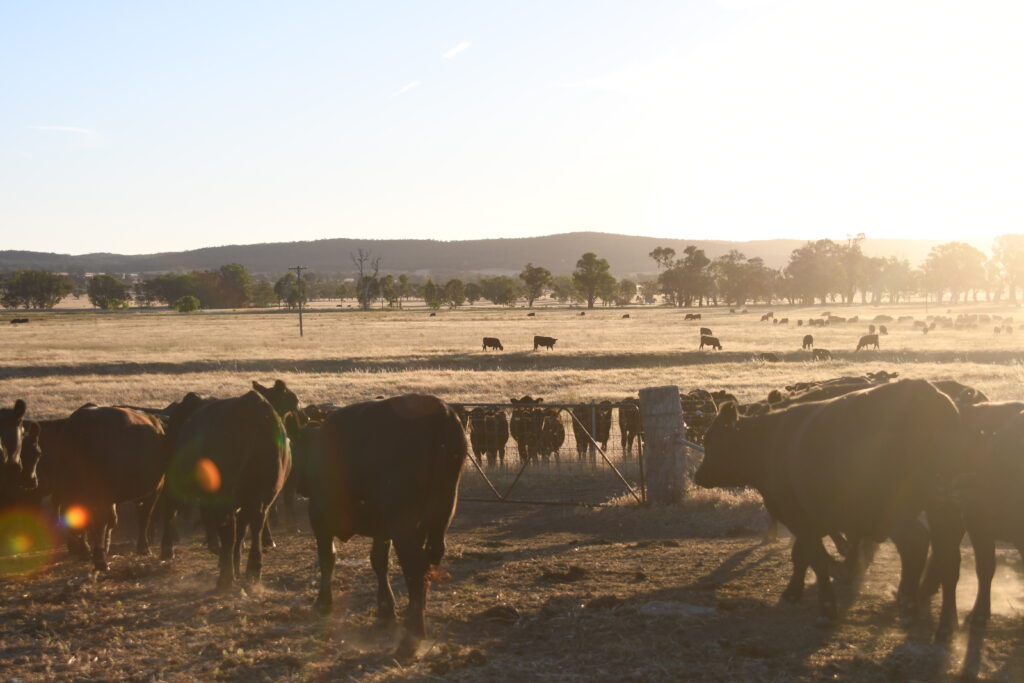
What started as plans for a gentle six-month transition into farming became a complete operational overhaul of the 2,100 ha (1,841 effective) property that has been in the family for six generations and over 150 years.
The timing of the takeover wasn’t ideal for Angus, who arrived in a “pretty rubbish season”.
The spring was light, and feed was sparse.
“We had 700 autumn-calving cows coming into lactation, and no ground cover.”
But it was this crisis that catalysed the data driven transformation now underway at Big Springs, and aligning the peak feed with the stock’s demand for it seemed a logical change.
The Fundamental Shift
Armed with an open mindset about how things could be changed within the program, Angus pulled farm reports through Agrista and found what he describes as “clearly evident on all sides of the spectrum,” their autumn calving pattern was completely misaligned with their peak pasture growth curve in October.
The obvious solution was to shift to an August calving, but the challenge meant no calves for 18 months as they transitioned 700 breeders into the new plan.
Pat had always calved in the autumn to capture different market opportunities. Having only gained control of the property in his later years, he’d always just continued with what previous generations had done before him.
“Pat had heard about calving to the grass growth, but he didn’t get the keys to the farm until he was almost 70,” Angus explains.
Pat was also busy with the farm’s diversification project, selling Big Springs water, the jewel in the crown of the Wilson enterprise.
After a short consultation period, the decision was made to shift the entire herd in one hit. Angus says Dom Walker from RCS Consulting was a driving influence for the move. Using HeiferSELECT genomic testing, they tested 350 cows (about half the mob), culled 83 cow-calf units, and purchased 60 pregnancy-tested-in-calf cows with favourable EBVs three months later.
“So we did a bit of a swap, which was heavily beneficial.”
The Bull Cull
When Angus took over, there were 11 station-bred bulls in the paddock ready for spring joining. These were bulls Pat had kept purely because he liked their mother and the look of the bull calf; a common practice on many properties.
Angus HD50K tested all 11 bulls and immediately culled nine of them, as they were in the bottom 50% of the cohort. Angus says that traits critical to his breeding philosophy, including calving ease, simply weren’t there.
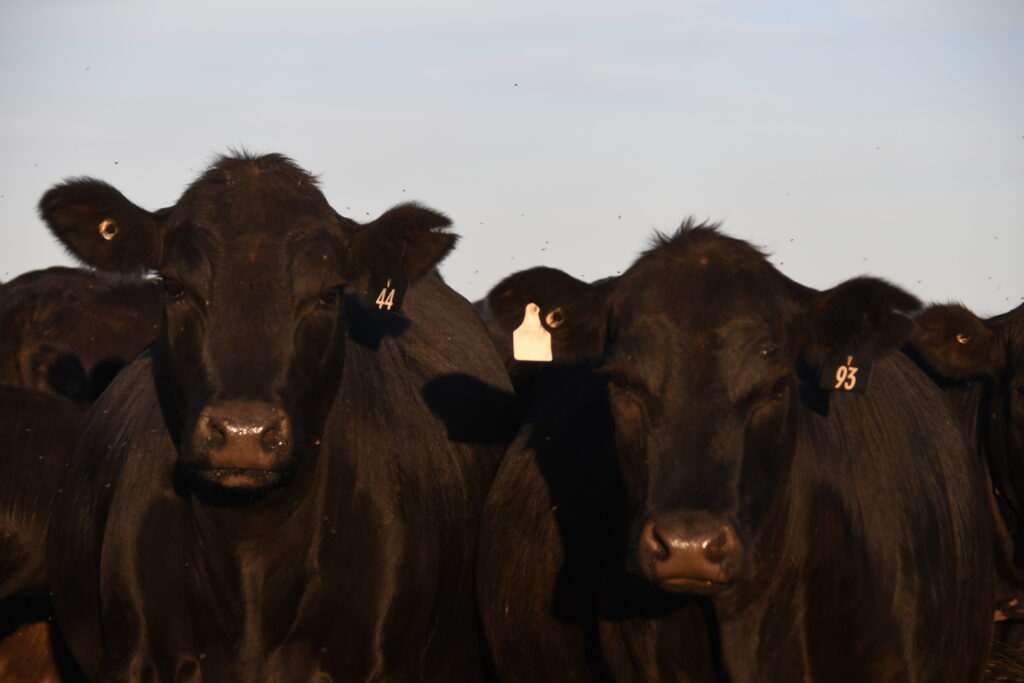
“Station bred, unknown bulls can leave rubbish progeny,” he says bluntly.
Only two station-bred bulls made the cut. They were structurally sound animals that also performed adequately on the Angus Breeding Index and met the breeding objectives.
While Pat was frustrated spending $15,000 on stud bulls, some of which break down after only a few years, Angus sees the financial benefit those genetics deliver, not just in replacement heifers, but in feeder progeny being sold to feedlots.
As Jake Phillips told him, “What you’ve done by getting rid of those nine bulls is remove the ten-year consequences of lower genetics.”
Breeding Objectives
Angus is methodical about bull selection, whether purchasing at stud sales or selecting AI sires. His breeding objectives are clear: low birthweight, moderate mature cow weight (targeting 600-650kg, down from current 700kg), neutral rib and rump, high IMF and good carcase traits.
Looking forward, the mature body condition EBV will be increasingly important.
For AI, he uses Rennylea semen, carefully selecting a heifer bull and a cow bull to use over two years to avoid inbreeding.
“There’s never a unicorn, but you can get most of the traits you’re looking for by using AI.”
The advantage is getting the exact genetics you want, rather than being outbid at a sale and settling for your second choice of herd bull.
This year, Angus phenotyped the entire cow mob and completed two rounds of AI on the MA cows (they had no calves at foot), and one round on the heifers, before running stud bulls over the cows to follow up. Going forward, he’ll likely do one AI round for cows and two for heifers.
Two heifer bulls were purchased this year from Old Man Creek, focusing on high Angus Breeding Index, maternal traits, high calving ease, and a more moderate cow size to bring that down a bit. More bull purchases are planned for 2026 stud sales.
Heifer Selection
For heifer replacements, Angus tests 200-220 animals with HeiferSELECT annually and keeps only those in the top 50%, expecting to retain 150-170 as replacements. As stocking rates increase with infrastructure improvements, fewer cows will be culled until the target of 800 cows is reached. The long-term goal is to retain 100-120 heifers annually.
“As a group, the Angus females are coming back in the top 40% in genomic testing. If you take off the older tail, we’ve got a really good group of heifers coming through.”
He was initially hesitant about Heifer Select, but the alignment to TACE (Trans-Tasman Angus Cattle Evaluation) seals the deal for him.
“Over the last three years, Jake Bourne from Angus Australia has been instrumental in assisting how we use the data to make management decisions.”
“That alignment to TACE is very powerful. I know that when I’m looking at the heifers, I’m comparing the same data as what I’m looking at with bulls.”
The plan is to join all the heifers identified as being in the top 50%, AI them, then either retain them or market the in-calf heifers at a premium. All steers and residual empty heifers will be grown to feedlot weight and sold on.
Infrastructure
From an infrastructure perspective, the transformation in the first six months has been dramatic. Water trough numbers have increased from 10 to 54, including the tanks to supply them, a massive capital investment that’s fundamental to the new rotational grazing system.
“We’ve introduced rest for the first time, administered through AgriWebb [rotational grazing planner].”
The cattle have gone from running in mobs of 20-30 cows across 35 paddocks, to three mobs of 2-200-250 cows across approximately 90 paddocks, many created with hot wires.
The labour savings have been substantial, with the cessation of feeding 40-odd paddocks with a truck and trailer.
“That had to stop; it’s too expensive.”
Stock handling efficiency has increased significantly, with less back-and-forth from the yards and an Optiweigh to monitor weight gain and animal health.
The rotational system better utilises feed at different times of the year while providing crucial pasture rest and the ability to feed budget accurately.
Wagyu Side Hustle
The property continues running 12 high-quality Wagyu bulls over older, non-replacement cows (previously run over heifers), maintaining an established market for F1 Wagyu progeny. Depending on pasture availability, these cattle sell as backgrounders (330kg) or at feedlot weight (up to 500kg). It’s a pragmatic use of existing genetics while focusing improvement efforts on the Angus herd.
“We have the bulls there already, and we have the market to sell them, so it makes sense to continue.”
The Humble Sheep
Angus was handed over 400 Border Leicester sheep in April, but he’d like to get rid of the ewes altogether. He’s got that number down to 280 already, doing it slowly so that he can utilise the existing Poll Dorset rams.
Unlike the manner in which Angus has held the cows back for a spring calving, the sheep have been pushed forward instead, with another joining in February to produce three sets of lambs in 18 months.
Once the sheep breeding stock is gone, Angus and the team will only buy trade lambs as seasonal feed allows.
“We want to do one thing really well, and that’s the cattle, rather than try and run two breeding enterprises that compete directly for feed,” Angus explains.
Numbers That Matter
Angus is focused on specific KPIs tracked through benchmarking. Currently, Big Springs produces 25kg of live weight per dry sheep equivalent (DSE), “we perform very well there,” he notes. However, production per hectare tells a different story; 163kg of live weight per hectare annually for beef production.
“Of course I want that ‘per hectare’ figure to improve, who wouldn’t?”
The reason he values benchmarking is to track changes over a three to five-year period and ensure the production is lifting.
“I don’t want to sacrifice the gross profit per DSE either. Ideally, you want to increase production without increasing the cost.”
Supplementary feeding in autumn is mostly on-farm cut and fed, but Angus’ goal is to never feed in paddocks again. Instead, he wants paddocks locked up for rest and recovery. He is currently building a containment area next to their fodder storage and laneway system for up to 800 cows.
“Lock them up when we’ve still got ground cover. Do it early to avoid waiting and then getting desperate for feed.”
Grazing crops are utilised in summer months, providing additional flexibility in the system.
If it can be avoided, nothing from Big Springs goes through the saleyards. Cattle go directly to the feedlots, including JBS, Rangers Valley, and Teys, with the Wagyu directed to Ashleigh Park at Culcairn. Even cull cows now go straight over the hooks rather than through markets, a change that’s delivered fantastic results since Angus took over.
The Long Game
Angus hasn’t seen results from his changes yet, and he’s realistic about timeframes.
“We won’t see our AI progeny till next spring, and all the water infrastructure will be done by then, so we’ll start to see how the spring calving works with the grass curve. But it’ll be three years before we start to see the full results of the changes.”
That long-term perspective is exactly what data driven decision making requires, the patience to let genetics and management systems prove themselves.
Pat’s Legacy
While Angus may be the one making the big changes and important large scale decisions, he credits his father for enabling the opportunity.
“Pat has always done an incredible job juggling everything on the farm. While I’ve come in and made a lot of changes in a short space of time, that doesn’t take away from what Pat achieved during his tenure on Big Springs. I wouldn’t be in the position I’m in or have the opportunities without his support, that’s the key.”
While Pat may have stepped back, long term general hand of 18 years Craig Lally is a steady influence.
“There’s simply nothing he can’t fix, he’s a legend.”
Farm manager Chris Mullins is also an integral part of the team, handling the day to day operations, including grass and rotational grazing management alongside animal health and the farms yearly planner. Angus is there for all the big days, such as weaning, AI, lamb and calf marking, and of course, the bull buying he’s been involved in since he was about 18.
Big Springs Station is showing us what’s possible when succession planning, diversification, and new school data driven management align. The changes Angus has implemented, genomic testing, AI programs, rotational grazing, infrastructure investment, and ruthless culling based on objective data, aren’t revolutionary individually. What’s remarkable is the speed and conviction with which they’ve been implemented as an integrated system.
Author Credit: Sarah Horrocks
(Previously published in the Summer 2026 Edition of The Angus Bulletin)