From breeding decisions to beef: Angus connects the dots in WA

From putting breeding decisions to the test in a Boyup Brook paddock to seeing where Angus cattle fit within one of Western Australia’s major feedlot operations, a busy few days in the west gave Angus Australia plenty of opportunity to connect with producers and see the WA industry first-hand.
Angus Australia President Peter Collins, CEO Scott Wright, Senior Business Manager Kathryn Duddy and Extension Officer Dr Brad Hine travelled west for the WA Angus Affiliated Group’s annual Spring Walk, using the visit to spend additional time with members and industry along the way.
Dr Hine began the week in the South West, running a Driving Better Breeding Decisions masterclass at Rhodes Pastoral, Boyup Brook, on Friday, September 11.
Around 25 commercial and seedstock producers took part in the practical day, which covered genetics and genomics before putting participants to the test with a group of Rhodes Pastoral commercial females.
For Dr Hine, the strong representation of younger producers was one of the most encouraging aspects of the day.
“To me, the highlight of the day was seeing so many young beef producers come along and their willingness to share insights into their operations,” he said.
“There was a real sense of optimism about the future of the beef industry and a willingness to explore the opportunities that new technologies, including genomic tools, can offer.”
Following cattle further along the chain
On Tuesday, September 15, the focus shifted from breeding decisions on farm to where those decisions can ultimately lead.
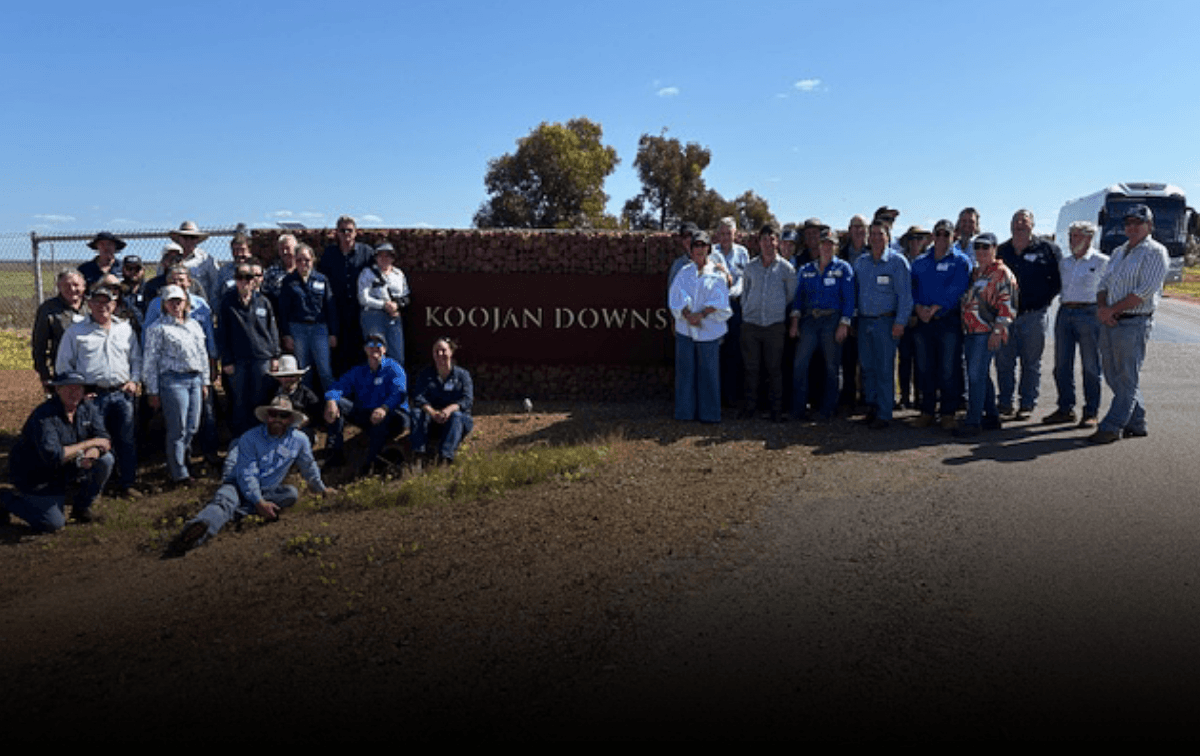
Around 50 producers and industry representatives joined the WA Angus Spring Walk tour of Harvest Road’s Koojan Downs Feeding Facility, coordinated by Spencer Knight with assistance from the WA Angus Affiliated Group committee.
Harvest Road Chief Operating Officer, Agribusiness, Ben Dwyer and Koojan Downs Business Unit Manager Gino de Steffani travelled with the group, providing an insight into the operation and what Koojan Downs is looking for in the cattle entering its program.
While Harvest Road has its own breeding operation, commercial Angus cattle sourced from WA producers remain an important part of the feedlot’s supply.
Just as importantly, information can flow back the other way. Access to carcase data allows suppliers to see how their cattle have performed further along the chain and take that information back into future breeding decisions.
Angus Australia CEO Scott Wright said the visit demonstrated how value is created around Angus.
“There is enormous value in the Angus supply chain, but that value isn’t created by any one part of it,” Mr Wright said.
“It starts with the breeding decisions being made on farm and continues as those cattle move through the supply chain, right through to the Angus product the consumer ultimately chooses.
“Seeing an operation like Koojan Downs and hearing what they need from cattle, as well as the information that can come back to producers, helps connect those pieces.”
Mr Wright also sat down with Mr Dwyer for an upcoming episode of Angus Australia’s The Angus Table podcast, while Harvest Road rounded out the tour with lunch and an opportunity to sample some of its beef products.
Protecting the value of Angus
That evening, 103 Angus producers and industry partners gathered at The Vines Resort, where Mr Wright challenged the room to consider just how much value now sits behind one word: Angus.
The Angus name is recognised well beyond the cattle industry. Consumers choosing Angus beef do not need to understand EBVs, genomics or the production systems behind it. What they have is an expectation of quality.
That expectation has taken generations to build, with value created at every point in the chain, from genetic improvement and commercial production through to feeding, processing and ultimately the consumer.
Mr Wright said protecting what Angus represents, and the systems that underpin it, was an important responsibility for the organisation.
It is also central to Angus Australia’s concerns about the proposed development and commercialisation of a multi-breed genetic evaluation.
Mr Wright briefed members on the organisation’s discussions with Meat & Livestock Australia, saying management and the Board had been candid about their concerns and had sought greater clarity around the proposed business model.
For Angus Australia, the question is not simply how a multi-breed evaluation would operate technically, but what it could mean for Angus breeders and the genetic systems that have helped build value in the breed.
The discussion provided a timely lead into Angus GenetiQ, Angus Australia’s own genetic evaluation platform developed specifically for Angus.
Dr Hine took producers through how the platform is developing and, importantly, what is coming next.
Seven additional traits are expected to be released between now and the end of 2026, bringing Angus GenetiQ to a full suite of traits for members. A breeding index is also in development and expected by the end of the year.
But the potential goes further than reproducing the genetic information producers already use.
Having its own evaluation gives Angus Australia the flexibility to develop new traits and tools as research progresses and industry needs change.
Future opportunities include genomic tools for commercial producers to help with replacement female selection, herd benchmarking and understanding the performance of sires within their own herds.
Angus Australia President Peter Collins encouraged members to explore Angus GenetiQ and become familiar with using it in their breeding decisions.
He said visits such as the WA Spring Walk were equally valuable for the Board, providing an opportunity to get into the regions and see the different production systems in which Angus cattle are performing.
Mr Collins thanked outgoing WA director Andrew Kuss for his eight years of service on the Angus Australia Board and welcomed newly elected WA director Mark Muir.
He also updated members on the Angus Youth National Roundup, which will celebrate its 40th year in Bendigo in January 2027, and spoke about the Board’s focus on Angus Australia’s financial progress and ensuring the organisation remains sustainable in a changing industry.
For those who took part in the Spring Walk, Koojan Downs offered a chance to see where breeding decisions made years earlier can eventually lead.
The discussions that followed at The Vines brought the focus back to what sits behind those decisions: the genetics, information and systems that will shape the next generation of Angus cattle. And, perhaps most importantly, the value attached to the Angus name that everyone along the chain has a stake in protecting.