Beyond the Bull: Building Better Breeding Decisions in Central Australia
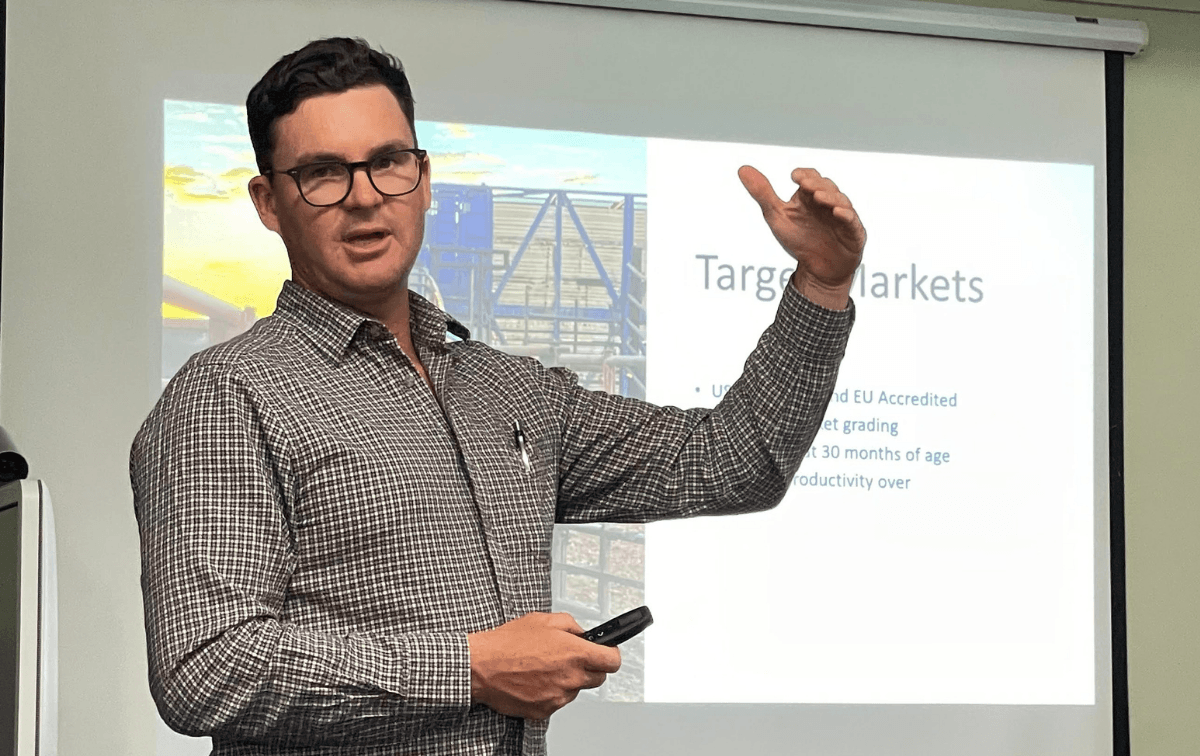




A partnership between Angus Australia and the Centralian Beef Breeders Association has delivered a practical three-part learning series designed around the real decisions Central Australian cattle producers make throughout the breeding year.
Improving a breeding program does not happen through one bull purchase, one workshop or one set of Estimated Breeding Values. It happens when producers have a clear direction, understand the tools available to them and can confidently apply that information when selecting bulls, retaining females and planning the next generation of their herd.
That was the thinking behind Beyond the Bull, a three-part workshop and mentoring series delivered by Angus Australia in partnership with the Centralian Beef Breeders Association (CBBA).
Beginning with a face-to-face workshop in Alice Springs in October 2025, followed by an online bull selection session before the January sale season and concluding with a practical female selection and genomics workshop in July 2026, the series followed the annual breeding decision-making cycle.
Rather than delivering isolated technical presentations, each session built on the one before it. Producers progressed from establishing a breeding direction, to finding bulls capable of delivering it and finally to identifying the females most likely to carry that progress into the future.
Starting with direction
The inaugural October workshop brought together 20 Central Australian cattle producers to examine breeding program design, Estimated Breeding Values, live animal assessment and the importance of aligning cattle selection with a defined production system and target market. Participants worked through the fundamentals of developing a breeding objective that reflected the realities of their own businesses.
For Central Australian producers, that meant considering considerably more than performance figures alone. Cattle must remain fertile, structurally sound and productive under extensive conditions, while producing progeny capable of meeting market requirements that may be thousands of kilometres from where they were bred.
The workshop challenged participants to clearly define the cow they required, the progeny they intended to produce and the markets those cattle needed to enter. From there, the group considered which traits deserved the greatest selection pressure and where balance was required.
Live cattle assessment created valuable discussion around the relationship between phenotype, function and genetic information. Guest presenter Ross Stanes of Lyndavale Cattle Co also shared the experience of operating a large-scale breeding enterprise across the South Australian and Northern Territory border, including the role Angus genetics play within the business.
The strongest outcome from the first workshop was not a single preferred type of animal or a universal set of EBV targets. It was that each participating business began developing a clearer and more deliberate direction of its own.
Turning objectives into bull-buying decisions
The second session was delivered online in January immediately before many producers began assessing catalogues and preparing for the autumn bull-selling season.
This timing was deliberate.
A breeding objective only creates value when it influences the bulls that are shortlisted, inspected and ultimately purchased.
The online workshop helped participants convert the direction established in October into a practical bull selection strategy. Producers worked through sale catalogues, EBVs, selection indexes, pedigrees and the process of developing a shortlist before attending a sale or inspecting bulls privately.
The discussion focused on identifying the traits that were genuinely important to each business, setting clear non-negotiables and avoiding the temptation to chase individual figures without considering the complete animal.
Participants were encouraged to assess whether each bull fitted their cows, their environment and their intended market, not simply whether the bull ranked highly for a popular trait. Physical inspection remained an essential part of the process. Structure, temperament, maturity pattern, muscling, capacity and overall suitability all needed to be considered alongside the available genetic information.
Importantly, the session was not about finding one bull that could fix every problem. It was about building a team of bulls that could steadily move a herd in the desired direction while managing risk, maintaining adaptation and avoiding unnecessary extremes. By scheduling the workshop immediately before the selling season, participants could take the knowledge directly into their own purchasing decisions.
Looking beyond the bull
The final workshop, held in Alice Springs in July, turned the attention from the bulls being introduced into a herd to the females responsible for carrying the program forward. Presented by Jake Bourne and Jake Phillips, Angus Australia and Lachlan Ayoub, Zoetis, the workshop explored replacement heifer selection, functional female assessment and the growing role of genomic tools within commercial breeding programs.
The day reinforced a simple but important message: bulls provide genetic opportunity, but females determine how successfully that opportunity is retained, multiplied and expressed within the herd. Selecting replacement heifers is therefore one of the most influential decisions a breeding business makes.
Heifers from Palmer Valley Station were brought into Alice Springs for a practical selection demonstration. Participants assessed the heifers physically, considering structure, temperament, maturity pattern, capacity, frame and their apparent suitability as productive females under Central Australian conditions. They were then able to compare those phenotype observations with the animals’ genomic information.
This created one of the most valuable discussions of the entire series.
Phenotype provides information about the animal standing in front of you, how she is built, developed and has performed within the environment in which she was raised.
Genomic information provides another layer, offering greater insight into the genetic potential the animal may pass to the next generation. Neither source of information should operate in isolation. A female may be visually impressive but not necessarily possess the genetic strengths required to move the herd towards its breeding objective. Equally, a heifer with attractive genomic results must still be structurally sound, functional and capable of performing in a demanding environment. Participants could compare where their physical assessments and genomic results aligned, where they differed and what those differences could mean for the future direction of a breeding program.
The exercise moved genomics away from being an abstract report or set of figures and made it a practical selection tool. It demonstrated how phenotype and genotype can be used together to identify females with the strongest chance of becoming productive, long-term contributors to the herd. Angus Australia and CBBA sincerely thank Zoetis for its sponsorship and support of the July workshop. Their contribution helped provide producers with direct access to genomic expertise and demonstrated how modern selection tools can be applied within extensive commercial herds.
A partnership built around producers
The success of Beyond the Bull was founded on the partnership between Angus Australia and the Centralian Beef Breeders Association. Angus Australia brought technical knowledge, genetic evaluation resources, industry connections and experience in breeding program development. CBBA ensured the series remained grounded in Central Australian production.
The association identified the need, brought producers together, coordinated local arrangements, maintained engagement between sessions and helped ensure the content addressed the questions its members were genuinely asking. CBBA member Ellen Easy, Alcoota Station, Alice Springs said “ The Beyond The Bull workshop was a great way to incorporate useful genetic information to our business.” She went on to say “We learnt about EBV’s and bull selection, support when going to bull sales and how to set yourself up well for heifer selection. The 12-month program was well rounded and more in depth than the usual 1 – 2 day type of workshops we get in our area. Angus Australia and particularly Jake Phillips need to be thanked for their commitment over the past 12 months, it has been appreciated by all the Centralian Beef Breeders”.
CBBA’s role extended well beyond hosting workshops. Its members drove the discussions, shared their experiences and were prepared to openly examine the strengths, weaknesses and future direction of their own breeding programs. That local ownership gave the series relevance and momentum.
The program was not designed to tell every producer to breed the same animal. Central Australian businesses differ in environment, cow base, scale, market access, management capacity and business objectives. The purpose was to give producers a repeatable decision-making framework, know the environment, understand the market and define the breeding objective, select bulls that move the herd towards it, retain females capable of sustaining that progress, measure the results and continue refining the direction. That is how meaningful genetic improvement is made.
Beyond the Bull demonstrated what can be achieved when local producer leadership is matched with technical support and practical learning delivered at the right points in the production calendar. The series may have carried the name Beyond the Bull, but its lasting value was in encouraging producers to look beyond any single animal, sale catalogue or set of numbers. It was about building breeding programs with purpose and giving Central Australian producers the confidence and tools to make every selection decision count.