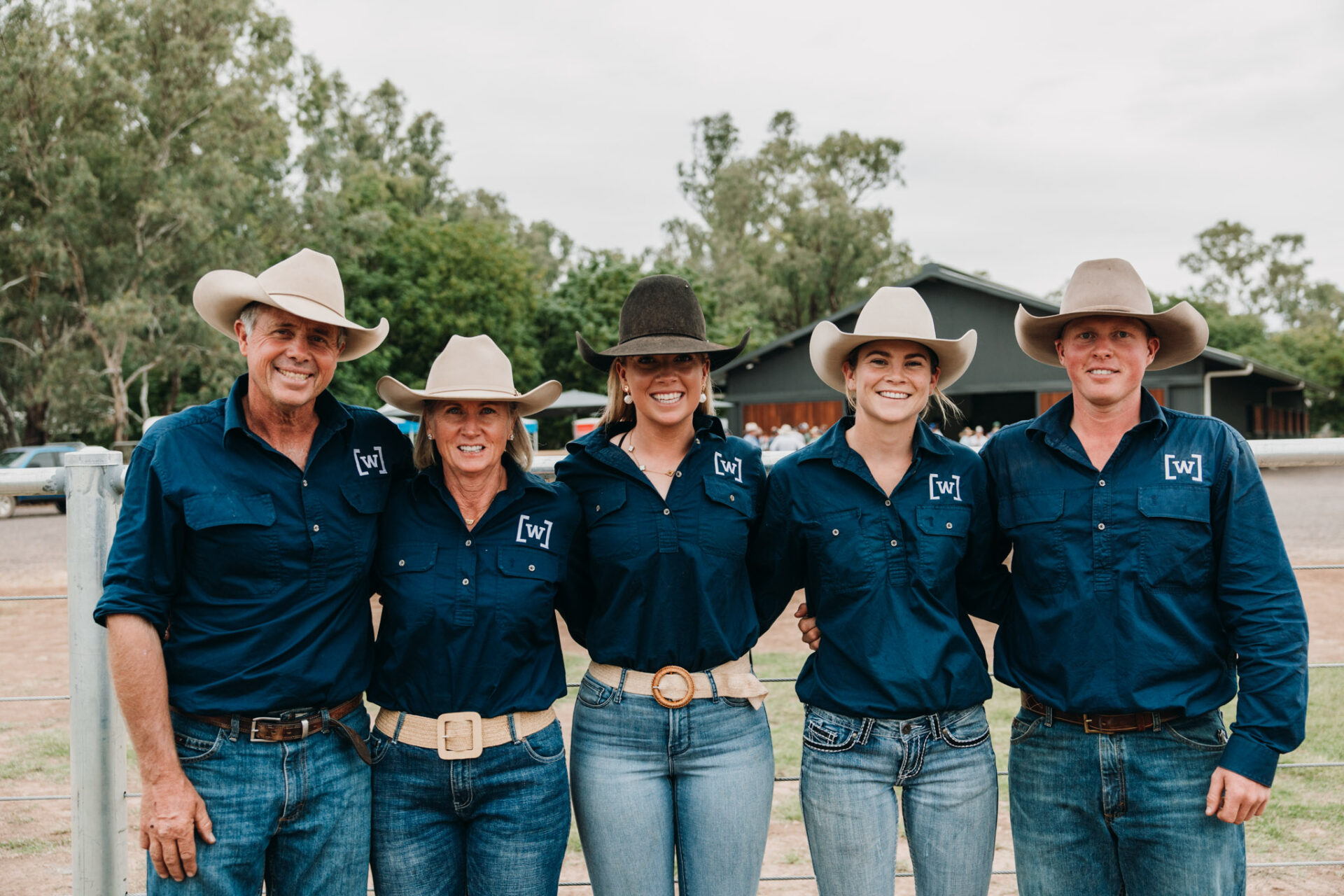
In the central west of New South Wales, the Wrigley family call the Condobolin region home. Across two properties, Wrigley Cattle Co is run by family unit Andrew and Natascha Wrigley, their daughter Anika, son Charlie and his partner Anna.
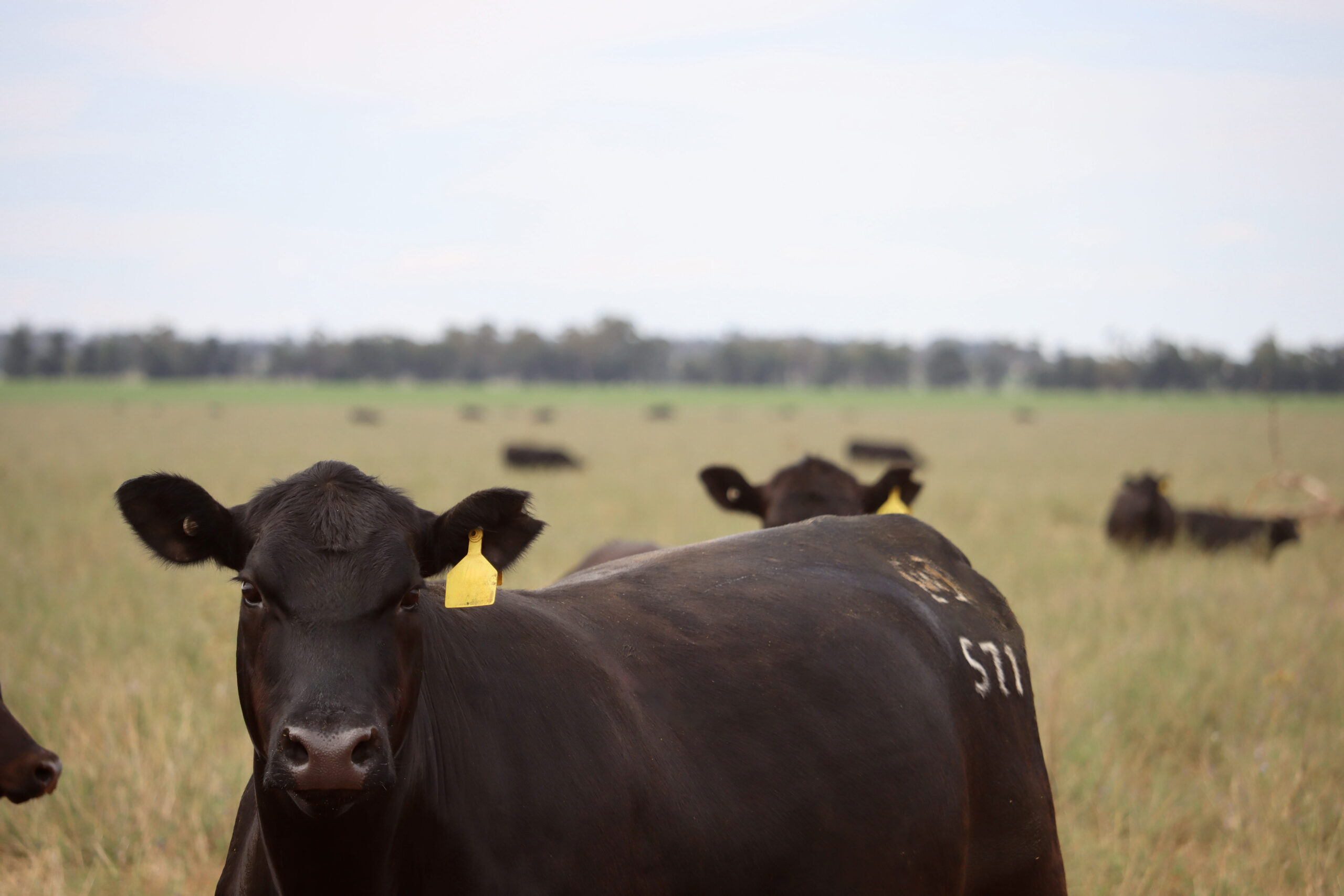
Wrigley Cattle Co is a mixed farming enterprise, consisting of a seedstock Angus herd, commercial Angus operation and a winter cropping program.
The Wrigley family’s Angus roots span decades, having first been involved with Angus cattle in the 1980s.
In 2005, the business model pivoted to breeding Santa Gertrudis bulls contractually for S. Kidman and Co, before returning to the Angus breed in 2014.
Since 2014, the Wrigleys have been establishing their seedstock and commercial Angus operations, conducted across two properties east and north-east of Condobolin.
The family run their breeding cows for both operations on their north-eastern property, on predominantly red sandy loam country. This property is also host to their winter cropping program and predominantly lucerne pastures. With an annual rainfall of 425mm, the lucerne is utilised by the family due to its adaptability to the country type and through low rainfall periods.
On their eastern property, on the banks of the Lachlan River, the family run Angus and Angus-influenced trade cattle. They also keep young stock and produce hay at this location.
Truly a family operation, all members are involved in the day-to-day functionality of the business.
“I grew up helping in the business and getting in the way,” said Charlie. “Learning about cattle and grain growing through my father and family.
“After school I headed up to the East Kimberley for a few years. Had an absolute ball and enjoyed the work – being exposed to northern operations, meeting lifelong friends and mustering in some exciting situations.
“I then came home back to Condo for a year before completing my Bachelor of Business (Agriculture) at Marcus Oldham. Since then, I have returned home to help in the family business.”
When looking at the Wrigley Cattle Co operation and their business mindset, Charlie said, “I like a phrase that I heard a few years ago. I don’t know who made it up, but it is simple and sums up our breeding herds. ‘A cow must have a calf, get back in calf and the calf she raises lots of people must want to buy.’”
In 2025, the Wrigley family joined 750 cows and 265 heifers in the commercial portion of their business and 250 cows and 100 heifers in the seedstock operation. They also utilised Embryo Transfer (ET) to implant 120 stud embryos into a portion of their commercial herd.
Joining at Wrigley Cattle Co starts at the beginning of September in both their commercial and seedstock operations, for calving to start in June of the following year. Heifers are joined at 13 to 15 months to calve down as two-year-olds.
“We have shortened our joining period to eight weeks in both herds,” said Charlie.
“It has helped greatly with ease of management, turnoff of progeny and has had a very minor impact on conception rates.”
He continued, “Our commercial heifers are joined a few weeks before main herd joining to extend their return to oestrus time before their second joining.”
A number of factors come into the decision-making process of selecting genetics for integration into their herds, with their breeding objectives front of mind.
“We like to invest in genetics from other programs that align with our objectives. We rely on data and Estimated Breeding Values (EBVs) to help steer a lot of our selection.
“When we are looking for sires for our stud, they must have favourable genetic attributes, with the most emphasis placed on moderate calving, high growth, good carcase qualities and structure before we’ll physically observe the bull for sound structure, temperament and phenotype. Pedigree and dam history is something that we look at and how other progeny reared and performed.”
Within their seedstock operation, the Wrigleys utilise fixed-time Artificial Insemination (AI) in their mature females and fixed-time heat detection AI in their heifers, with year-to-year results for their AI program sitting between 50–70%. Charlie attributes their range of results to semen quality and rising nutrition.
Furthering their use of reproductive technologies, the Wrigleys have recently adopted the use of In Vitro Fertilisation (IVF) in their breeding program.
“We have only recently started using IVF to multiply our proven, high-performing breeding cows and collect some high-level maiden heifers,” said Charlie.
“The first drop of IVF calves are only young, but the program has worked well. We have implanted 120 embryos this year with an aim to get 55% calves weaned next year from that number. We think that AI and ET programs in our herd are crucial for outcross genetics and continuous herd improvement.”
When joining their commercial herd in 2025, the family removed the bottom 15% of their heifers classed on a 360kg weight cut-off, in order to achieve the most genetic gain in their commercial herd.
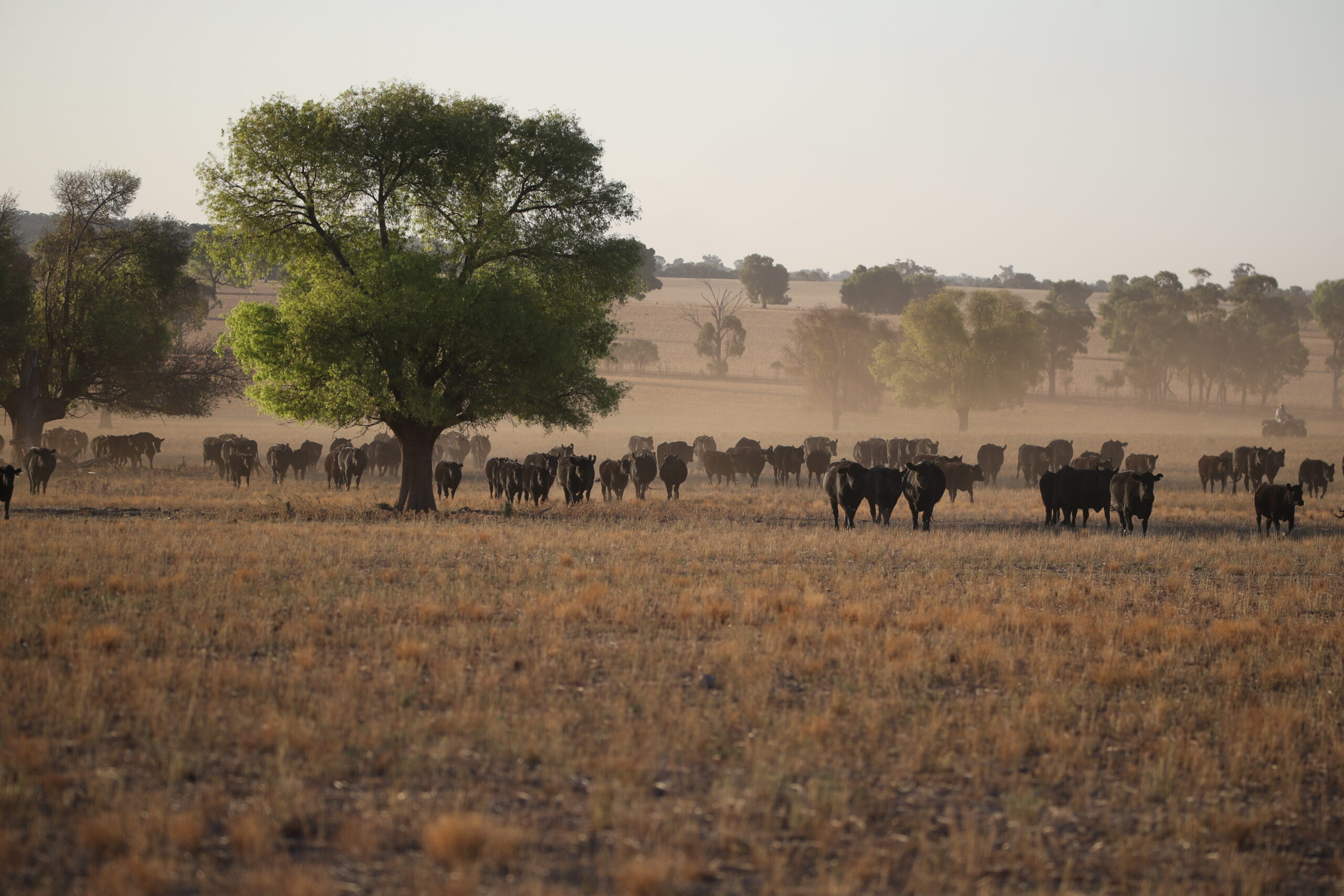
“We like to join a large portion of our heifers as they have higher genetic merit than an older cow and take less feeding. Then if the season demands we can sell a 6–8-year-old PTIC cow that has an attractive amount of life still left for buyers.”
The main drivers of success for their herd are identified with pregnancy testing results and weaning percentages, which are taken into consideration when making selection decisions through their herds come joining time.
“Our average weaning weight does take a bit of a hit with a large portion of weaners from heifers; on average our heifer calves are around 10kg lighter at weaning than a mature cow’s calf.
“Getting more animals weaned and weight gained has the biggest impact on our profitability. The seedstock side of the business is no different.”
The operation’s conception rate sits at an average of 93% and the weaning rate of that is 97–98%.
In order to achieve optimum results during their joining period, the Wrigleys adopt management practices that best set up their females for success each spring.
“We have a few practices that we follow around the joining period,” said Charlie. “We make sure all bulls heading to work are structurally sound and fertile. We try to have our heifers well grown and good weight for age at joining time and we administer vaccine boosters pre-calving.”
He continued, “We aim to have the cows/heifers on a rising plane of nutrition pre-joining but, pending the season, this isn’t always manageable. During joining we observe the bulls working and any broken or unusable bulls are taken out and possibly replaced depending how far through the joining period it is.”
Furthermore, the family have found practices such as utilising strong fencing and hot wires when socialising new bulls to an existing sire group, and allowing all animals time to acclimatise and familiarise themselves with each other before incorporating them into one group, of benefit to avoid breakdowns and issues in their sire group.
Keep/culling decisions are made based on criteria determined by the family to best optimise their breeding objectives. Emphasising both phenotype and genotype, the family cull for structure and udders. Fertility is an important trait, with the female required to calve and wean a sizeable calf every year. Poor temperament and structural breakdowns are all culled to ensure longevity in their herd.
Most cull animals are fattened and sold direct to the meatworks. Surplus females are advertised and mainly sold through auction platforms.
In 2025, the Wrigleys sold 43 bulls at their annual sale. In order to have markers of success in their own operations, particularly in their seedstock space, the Wrigleys also look to the successes of their clients and the retention rate of return customers seeking out their genetics.
With regard to the target markets for their breeding operations, the family aim to grow steers out to mid to heavy feeders by 12 to 14 months of age, selling into feedyards with mid to long-fed programs.
“In the past, with favourable seasons and suppressed feeder prices, we have grown steers and heifers to kill weights, around the 300kg carcase in grassfed MSA programs,” said Charlie.
“The carcase data from our own consignments and the feedback we get through the feedyards helps to track our genetic progression.”
While the family works to minimise risk within their business as much as possible, there have been challenges along the way. In the past decade, environmental trials such as two major flood events and the 2018–2019 drought have had significant impacts on the business. Furthermore, late frosts and variable rainfall that comes with the location of their operation have provided some areas of challenge, in particular to their cropping business.
When asked about the Angus breed and its future not only in their operation, but in the landscape of beef cattle, Charlie said, “I see the future of Angus cattle in Australia to remain strong and grow. The proactive breed society, progressive producers and large gene pool has enabled the breed to continually produce and refine profitable cattle.”
“There is great potential for collaboration with other breed societies and the implementation of multibreed breeding values to further advance beef genetics in Australia.”
When looking to the future of Wrigley Cattle Co, the family are working towards the continued growth of their businesses, and while the current economic environment provides some challenges, evolution and growth remain paramount to the family’s goals and business aspirations.
“Our goal is combining our direction with that of our clients’ needs and expectations to produce and deliver animals and a service that is profitable, reliable and backed by ourselves and the industry.”
Charlie’s beef leadership journey
In 2025, Charlie was selected as one of 12 young beef industry leaders to take part in the GenAngus Future Leaders Program. Through his selection in the program, Charlie headed to Launceston, Tasmania in May to tackle four days of intensive workshops, designed to assist the growth of his business acumen and personal development.
“I was interested and applied for the GenAngus program because of friends that are alumni of the program,” said Charlie. “They spoke very highly of what could be learnt and the connections developed at the program and in the years after. I thought I better give it a go.”
When posed with the question on what he took away from the experience that he considered beneficial to his professional and personal development, Charlie highlighted, “I believe the GenAngus program was beneficial to me in many ways but particularly in mindset and behavioural styles.”
“Something that I hadn’t been exposed to before and had highlighted to me is why people behave and interact the way they do. about my own and other attendees DISC profiles. It was a great discussion.”
“Interaction and behavioural styles are something that is overlooked a lot in industry, but I believe has great benefit to help manage and unlock potential in people.”
Echoing this reflection, Charlie had some words that heed fantastic encouragement for people considering taking the dive and applying for the GenAngus Future Leaders Program in the future:
“The GenAngus program is more than a week of learning and meeting like-minded people. It is the connections and contacts that are formed.”
“Now, with the mentor program starting up it can help guide people through critical decisions, increase knowledge on specific areas and have an experienced professional in your corner.”
Written by Cheyne Twist and first published in the Spring 2025 Angus Bulletin.