Insights from the Efficient Beef Updates 2025
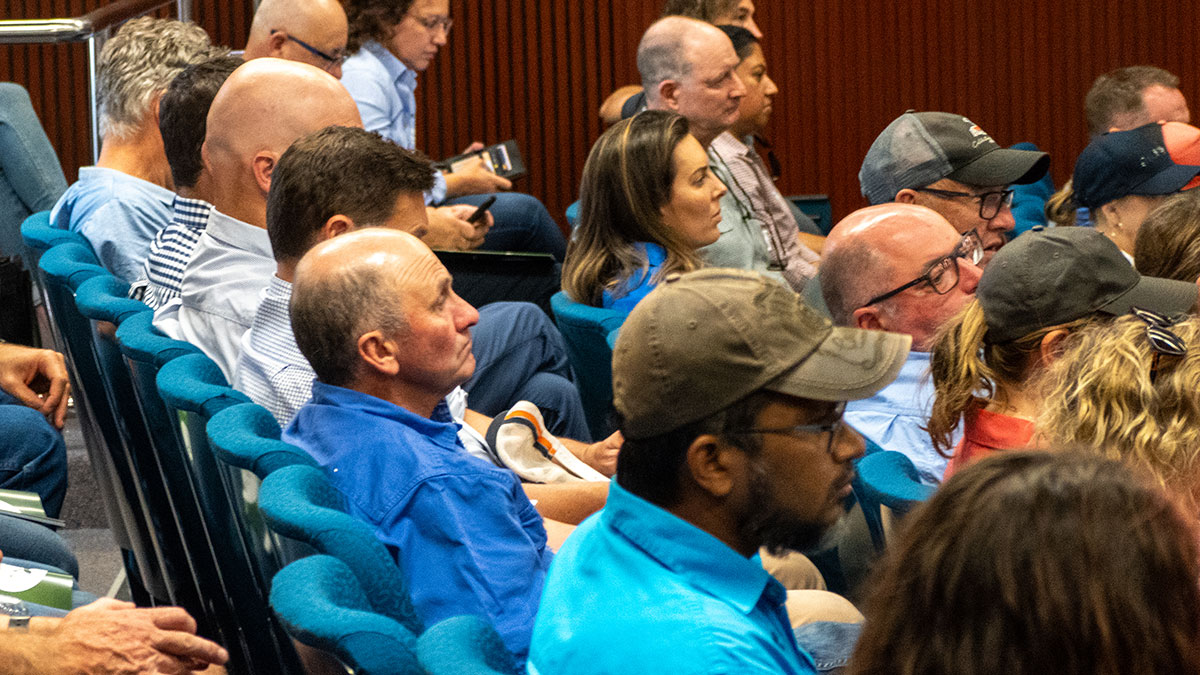




The 2025 Efficient Beef Updates brought together breeders, researchers and industry representatives for a full program of research insights, collaborative discussion and a hands-on look at the next generation of Angus cattle. Hosted at the University of New England (UNE) and the Tullimba SMART Farm feedlot, the event again highlighted how genetics, technology and producer engagement are shaping the future of efficient and sustainable beef production.
The day began at UNE with a series of research updates covering methane, meat quality, resilience, retail beef yield and the development of research breeding values. Attendees then enjoyed a lunch of ASBP steak prepared by the UNE meat science team before travelling to Tullimba to view the current Angus Sire Benchmarking Program (ASBP) cohort on feed.
Setting the scene: welcoming remarks
The morning opened with an introduction from UNE’s Professor Sam Clark from the Low Methane Beef project team, who welcomed producers and acknowledged the collaborative nature of the research. The program featured speakers from MLA, NSW DPIRD, UNE and Angus Australia, each bringing new data, fresh insights and practical applications for breeders. For the first time, attendees were able to view research breeding values for methane traits, a significant milestone and the result of several years of intensive measurement across feedlot and pasture systems.
MLA Sustainability Program – overview and updates
Dr Joe McMeniman, MLA Group Manager for Sustainability, outlined the broader sustainability landscape and Australia’s position as a global leader in emissions-efficient beef production. Joe highlighted the importance of balancing environmental, economic and social sustainability and discussed MLA’s priorities for the coming years, including improving emissions intensity and ensuring producers have clear pathways to adoption of new traits and technologies.
He noted that while Australian and North American cattle herds have declined since the 1970s, productivity has increased through efficiency gains. This improvement contrasts with rising global ruminant numbers and reinforces the value of continued investment in genetics and innovation.
Beefing up the gene pool
Professor Pete McGilchrist from UNE provided an energetic update on meat quality and retail beef yield. He explained the industry wide challenge of declining retail beef yield, which has slipped by roughly half a percent over the last two decades. Although Angus indexes place strong emphasis on carcass yield, he noted that commercial payment structures may not encourage breeders to prioritise it.
Pete outlined a major new five-year project that will generate up to 100 meat phenotypes per animal across ASBP cohorts 13 to 17. This will include traits linked to fatty acids, minerals, IMF, eating quality and new yield prediction measures designed to be cheaper and more practical to collect. He highlighted the potential for technologies, including camera grading, to future proof carcass assessment and improve the flow of commercial carcass phenotypes into BREEDPLAN.
“These next five years gives us the chance to collect more meat science data than ever before,” Pete explained. “We can turn that into better predictions, better breeding values and outcomes that benefit both breeders and consumers.”
Measuring methane on pastures
New South Wales DPI Research Officer Dr Tom Granleese took attendees through the lessons learned from four years of methane measurement on pasture. Using GreenFeed machines, Tom’s team recorded thousands of voluntary animal visits, navigating the added complexity of weather, pasture variability and animal behaviour. Angus cattle again proved highly trainable, performing well in both feedlot and pasture environments.
“Animals are not machines. The weather changes, pastures change and behaviour changes. That is why collecting data in commercial like environments matters,” he said.
Tom explained how methane fits into the carbon cycle and the importance of considering methane traits not in isolation, but as part of a whole system approach. He noted that methane represents a direct energy loss of five to fifteen percent of feed intake and that reducing methane intensity per unit of product is a meaningful goal for both efficiency and sustainability.
Unlocking the past: Using historical data to power methane EBVs
UNE Research Fellow Dr Mette Madsen updated the group on the progress of the Low Methane Beef project. After three and a half years of data collection, the project has now measured more than 6,000 animals from multiple breeds with over 200,000 methane records.
Mette shared early genetic insights showing that methane traits are heritable and that sires exist with favourable breeding values for both methane and key production traits. The project has successfully established a reference population and produced research breeding values for methane production, methane yield and methane intensity.
“Historical data is powerful because it allows us to connect the dots,” Mette said. “We are now able to generate research breeding values for methane traits with increasing confidence. The next step is helping breeders understand how to apply them.”
She emphasised that further work is underway to estimate additional genetic correlations, build stronger multitrait models and create tools that producers can confidently use within breeding programs.
Breeding resilient Angus cattle to increase efficiency
Angus Australia’s Dr Liam Mowbray and Dr Brad Hine explore resilience and immune competence traits, including the potential to identify animals that respond better to vaccination and withstand disease challenges. Liam noted that while immune competence shows weak negative correlations with some production traits, opportunities exist to balance selection so that animals can maintain performance while improving herd level health outcomes.
“These traits are still developing, but the signs are promising,” Liam said. “Resilience is part of efficiency. It is about producing animals that stay productive and healthy across a wide range of environments.”
Brad then provided deeper insight into immune competence and resilience traits, highlighting how they fit within current genetic selection strategies. He explained that the team has been examining the relationship between immune function and existing BREEDPLAN traits to understand how these emerging measures might influence breeding decisions. “Within this project we have looked at the correlation of immune function with the known BREEDPLAN traits, and you can see there that the relationship is generally weak and negative,” he said. “What that tells us is that we can improve immune competence without compromising the productivity traits breeders are already selecting for.”
The discussion emphasised the future possibility of combining resilience, methane and efficiency traits into a broader sustainability index tailored to different production environments.
Looking ahead with Professor Sam Clark
The morning wrapped up with Professor Sam Clark of UNE presenting Shaping Tomorrow. Sam outlined incoming research areas, including the refinement of methane and efficiency models, the future direction of research breeding values and how producer feedback will shape their adoption.
“This is an exciting time,” he said. “We are seeing data mature to the point where it can become genuinely useful for commercial decision making.” The audience was encouraged to provide feedback on how these new research breeding values should be communicated and integrated into breeding programs, reinforcing the importance of producer input as the project approaches its final stages
Lunch: ASBP steak on the grill
Following the morning of presentations, attendees moved to the Bistro where the UNE meat science team served ASBP steaks aged for 14 days and prepared from animals in the program. ASBP data for the animals used was available for viewing, allowing diners to connect eating quality with the underlying genetics and research measurements.
The steak was a highlight for many, with one researcher remarking that no one was likely to find a bad piece because the cuts selected for lunch were among the finest available.
On farm at Tullimba: seeing sires in action
The field day concluded with a visit to the UNE SMART Farm Tullimba Research Feedlot, where attendees inspected ASBP Cohort 14 steers and Southern Multibreed animals after 45 days on feed. This hands-on component remains a key drawcard for breeders seeking to compare sire groups and observe how different genetics perform under consistent management and feed conditions.
During the visit, attendees also heard from Christiaan le Roux of C-Lock, the company behind the GreenFeed systems used throughout the methane research program. Christiaan outlined how the technology captures methane output in real time and explained the importance of collecting voluntary, repeated measurements to build reliable, research grade datasets. He was followed by Andrew Donoghue from Vytelle, who discussed how their automated platforms record traits such as average daily gain and net feed intake. Andrew highlighted how these measurements help identify animals that convert feed more efficiently, providing valuable insights for producers aiming to lift efficiency and sustainability across their herds.
Later attendees spoke about the value of being able to walk the pens and track sire lines. For many, this was an opportunity to refine future sire selections and gain a deeper understanding of how the research connects back to real animals and commercial outcomes.
Among them was Tim Vincent from Booragul Angus, who appreciated the diversity of speakers and the opportunity to see the cattle on feed.
“It was a really worthwhile day,” Tim said. “Being able to hear from the researchers in the morning and then see the cattle in the afternoon brings it all together. It gives you confidence that the work happening behind the scenes is practical and relevant for producers.”
Tim highlighted the value of methane and efficiency research, noting that the cattle he viewed at Tullimba helped put the numbers into perspective.
“You can read about these traits, but seeing the animals that the data comes from makes a big difference,” he said. “It shows how these research programs are actually improving the breed.”
Professor Pete McGilchrist summed up the experience, noting that the day offered a rare chance to see research in action. From methane correlations to early EBVs and meat science developments, the integration of genetics, measurement and producer engagement was clear.
A collaborative path forward
As the buses prepared to leave Tullimba, attendees reflected on a day that again showcased the power of collaboration between UNE, NSW DPI, MLA and Angus Australia. Producer participation remains central to the progress of these projects, and researchers encouraged ongoing involvement as the next stages of analysis, evaluation and trait development unfold.
With research breeding values now becoming visible, and new traits on the horizon, the 2025 Efficient Beef Updates demonstrated how science and industry are working together to build a more efficient, productive and sustainable future for Angus cattle in Australia. Dr Mette Madsen summed up the day by observing “Seeing the cattle here at Tullimba really brings the research to life. We spend years building datasets and developing models, but standing in front of the animals reminds us what the work is all about. It is exciting to know that the methane breeding values we are generating will soon give producers a practical tool they can use to improve both efficiency and sustainability.”