MateSel: Tips, Updates and a Reminder — It’s Free for the Rest of 2025!
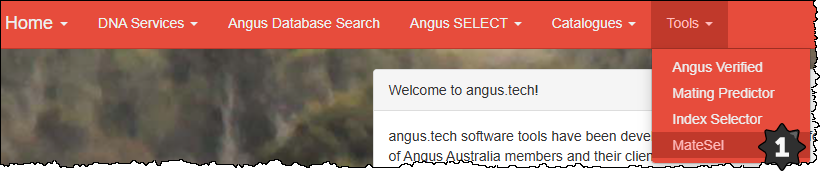










If you’ve been using MateSel via Angus.Tech, you’ll already know how powerful it can be for planning matings and guiding your herd’s genetic direction.
And if you haven’t tried it yet — now’s the perfect time.
Even if you’ve already finalised your 2025 spring matings, the next couple of months are still a great time to jump in and give MateSel a go. You can explore different joining scenarios, test breeding objectives, and see how the program could add value to your herd planning in future seasons.
The MateSel service is free to use for the remainder of 2025, giving breeders the chance to explore, experiment and get comfortable with the program before a small user fee is introduced in 2026 (pricing yet to be determined).
Here are a few handy reminders and tips to help you get the most out of MateSel while we continue developing the next round of software enhancements.
MateSel Tips
When uploading Animal IDs into MateSel:
These steps help ensure your mating scenarios better reflect the structure and management of your herd.
Need help formatting your upload file? See the MateSel Import File Format Guide
Want to see mid-parent values for all EBVs in your report?
We’re working with the MateSel developers, and the Angus Australia IS team to ensure future reports automatically include mid-parent values for all traits.
Understanding the terms:
| Field | Purpose | Suggestions |
| Max Matings | Maximum matings allowed per candidate | Natural Sires: Calculate the average number of matings required to cover all cows and add an additional 20-30% e.g. could range between 25-50 depending on number of male candidates.
Semen Sires: 1,000 (allowing MateSel to determine which semen sires based on the optimised contribution selection (OCS) or limit to the number of semen straws available. |
| Min Matings | Minimum matings if selected | Natural Sires: Calculate the average number of matings required to cover all cows and add subtract 20-30% e.g. could range between 20-30 depending on number of male candidates.
Semen Sires: 0 (unless hoping to clear semen stock previously purchased). |
| Must Use | Absolute minimum matings | Natural Sires: Where possible refrain from using.
Semen Sires: Only if aiming to clear semen stock previously purchased. |
These settings help MateSel balance genetic gain and diversity while meeting your breeding objectives.
Learn More
For support and further information, check out these resources:
Questions or feedback?
We’re always looking for ways to make MateSel more user-friendly and effective for our members. If you have any feedback or suggestions, please get in touch with the Angus Australia Extension Team — your input helps us continue improving the tools that support your breeding success.
For further information, please contact:
Hanlie Jansen
Phone: 0427 943 436
Email: hanlie.jansen@angusaustralia.com.au
Nancy Crawshaw
Phone: +61 2 6773 4643
Email: nancy.crawshaw@angusaustralia.com.au
Brad Hine
Phone: +61 2 6773 4613
Email: brad.hine@angusaustralia.com.au
Website: www.angusaustralia.com.au