
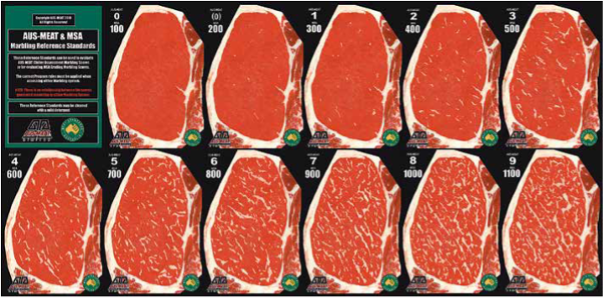
Both intramuscular fat percentage (IMF%) and MSA marbling score are economically important traits in Angus cattle, as they contribute to carcase value and influence eating quality through improved flavour, juiciness, and overall consumer satisfaction.
What are the differences between marbling and carcase IMF measurements?
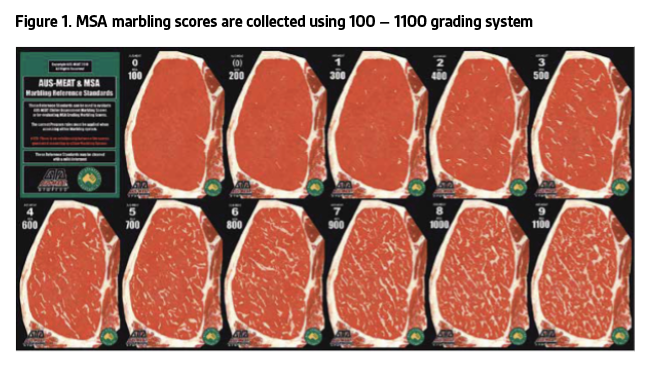
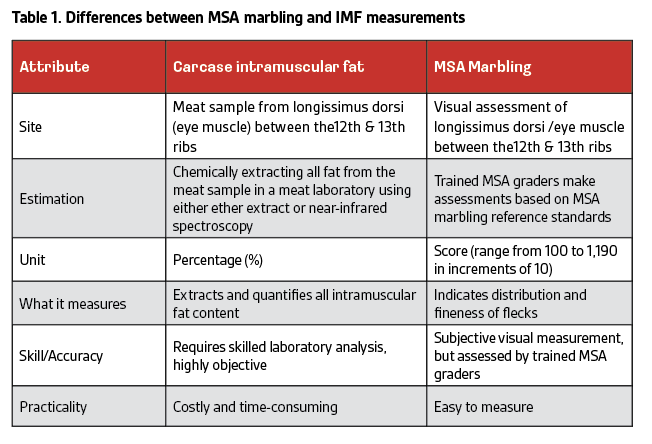
Both MSA marbling and IMF are assessed from the longissimus dorsi (eye) muscle between the 12th and 13th ribs. MSA marbling is assessed visually on chilled carcases, whereas IMF% is determined via chemical extraction of all fat from a muscle sample. While MSA marbling provides a subjective visual score (Figure 1), IMF% offers an objective quantification of intramuscular fat content. See further differences between carcase MSA marbling and IMF measurements in Table 1.
Recording of MSA marbling and carcase IMF
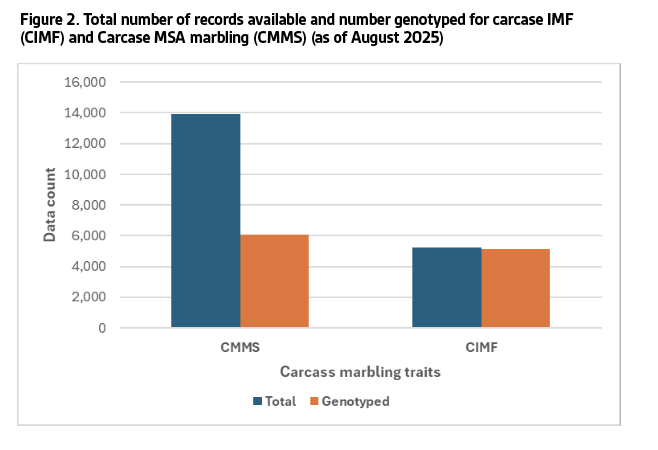
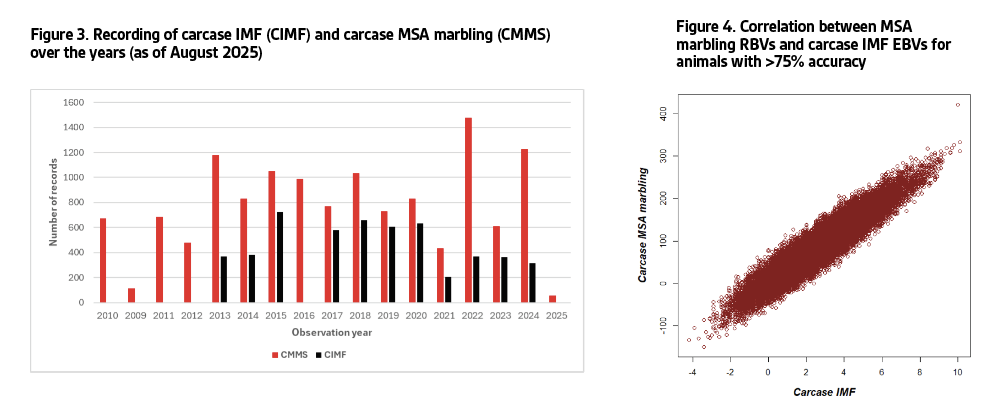
The Angus Australia dataset contains over 13,000 MSA marbling records, with around 44% also genotyped. For carcase IMF, there are more than 5,000 records, of which almost all (98%) are genotyped (Figure 2). The systematic recording of MSA marbling and carcase IMF traits over the years (Figure 3), supported by pedigree and phenotypic data collection from Angus Australia members and the Angus Sire Benchmarking Program (ASBP), underpins genetic evaluation aimed at improving eating quality.
Breeding Values for MSA marbling and carcase IMF
In 2023, Angus Australia, in partnership with the Animal Genetics and Breeding Unit (AGBU) and the Agricultural Business Research Institute (ABRI), introduced MSA marbling research breeding values (RBVs) through the TransTasman Angus Cattle Evaluation (TACE). Both carcase MSA Marbling Score RBVs and carcase IMF EBVs are estimates of genetic differences between animals in marbling or intramuscular fat at the 12th/13th rib grading site on a 400kg steer carcase. Higher values for either trait indicate that an animal is expected to produce progeny with a higher marbling score or a greater percentage of intramuscular fat in a 400 kg carcase.
The study of the Angus Australia data by AGBU demonstrated that a significant portion of the variation in MSA marbling score and IMF among individual animals is attributed to genetics, with high heritabilities of 0.54 and 0.53, respectively. As expected, MSA marbling and Carcase IMF are highly genetically correlated with a correlation of 0.80 (Figure 4). However, the correlation is not 1 due to difference between the traits as highlighted in Table 1. For example, fat stored in larger deposits, unevenly distributed fat, or muscle structure can obscure the appearance of flecks.
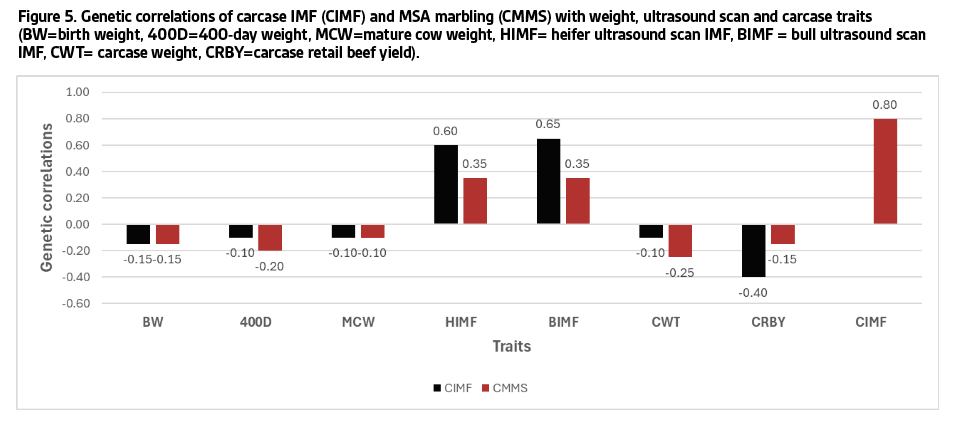
The study by AGBU also estimated the genetic correlations between MSA marbling score and wide range of production traits included in the multi-trait analysis model utilized in TACE (from the BREEDPLAN program) (Figures 5). As expected, MSA marbling and carcase IMF show their strongest positive genetic correlations with bull ultrasound scan IMF and heifer ultrasound scan IMF. Even though, EBVs for ultrasound scan IMF traits are not reported, they contribute to the carcase IMF EBV and MSA marbling RBV through genetic correlations in the multi-trait BREEDPLAN model, thereby improving accuracy.
Members are encouraged to make full use of the MSA Marbling RBVs when making breeding and selection decisions, particularly if they are looking to lift the MSA Marble scores of their herd. Selection for carcase IMF has already been assisting members in this space, as carcase IMF and MSA Marbling are strongly related with a genetic correlation of around 0.8. However, with the availability of MSA Marbling as a more direct trait, it is now recommended that members use MSA Marbling RBVs in conjunction with existing selection tools.
While carcase IMF is already included in Angus Australia’s selection indexes, the MSA Marbling RBV is not currently part of these indexes. This means that if improving MSA Marbling is a breeding priority, it’s important to consider MSA Marbling RBVs alongside the indexes when selecting sires and dams. Doing so will ensure you are targeting genetic improvement for MSA grading outcomes and capturing potential carcase premiums, while still balancing overall genetic progress.
If you would like to provide any feedback on or discuss the MSA Marbling RBV in further, please reach out to the Angus Australia Extension team at extension@angusaustralia.com.au.
Written by Dr Malshani Samaraweera, Geneticist Angus Australia, and first published in the Spring 2025 Angus Bulletin.